
报告主题:Two Coupled Oscillator Hypothesis of the Human Circadian System
报告人: Ken-ichi Honma, Visiting Professor of Hokkaido University;
报告时间:2014年4月14日09:30 AM
报告地点:703楼五楼报告厅
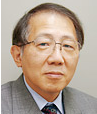 个人简介:
个人简介:
Ken-ichi Honma received his M.D. from Hokkaido University School of Medicine at 1971 and got his Ph.D. degree from Hokkaido University Graduate School of Medicine at 1977. He is the visiting professor of Hokkaido University, also is Board Director of the Kei-Ai Medical Incorporated Association and the President of General Incorporated Foundation Aschoff and Honma Memorial Foundation. He is focused on research of biological rhythm and sleep. He has published 75 papers and 13 books since 2001.
代表性论文:
Ono, D., Honma S and Honma K. Cryptochromes are critical for the development of coherent circadian rhythms in the mouse suprachiasmatic nucleus. Nat Commun 4:1666, 2013 (2013)
Kononenko, N., Honma S and Honma K. Fast synchronous oscillations of firing rate in cultured rat suprachiasmatic nucleus neurons: Possible role in circadian synchronization in the intact nucleus. Neurosci Research 75(3):218-27 (2013)
Kasukawa T, Sugimoto M, Hida A, Minami Y, Mori M, Honma S, Honma K, Mishima K, Soga T and Ueda HR. Human blood metabolite timetable indicates internal body time. Proc Natl Acad Sci USA, 109(37):15036-15037 (2012).
Enoki R, Kuroda S, Ono D, Hasan MT, Ueda T, Honma S and Honma K. Topological specificity and hierarchical network of the circadian calcium rhythm in the suprachiasmatic nucleus. Proc Natl Acad Sci USA, 109 (52):21498-21503 (2012)
Kwon HJ, Ohmiya Y, Honma KI, Honma S, Nagai T, Saito K, and Yasuda K. Synchronized ATP oscillations have a critical role in prechondrogenic condensation during chondrogenesis. Cell Death Dis. (2012) Mar 8:3:e278. Doi: 10.1038/cddis.2012.20.
Yoshitane Y., H., Honma S., Imamura K., Nakajima H., Nishide, S., Ono, D., Kiyota H., Shinozaki N., Matsuki H., Wada, N., Doi, H., Hamada, T., Honma, K., Fukada Y., c-Jun N-terminal kinase is a key player in photic regulation of the mammalian circadian clock. EMBO Rep. 13(5): 455-461 (2012).
(学部办公室)

