
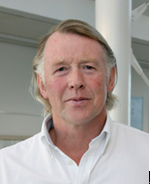
Title: Control of SUMO Targeted Ubiquitin E3 Ligases(类泛素蛋白SUMO靶向泛素E3连接酶的调控)
Speaker: Ronald T. Hay, Ph.D., Professor(Centre for Gene Regulation and Expression, College of Life Sciences, University of Dundee, Dundee, Scotland, UK)
Time: 13:00, 17th June, 2014(2014年6月17日下午1点)
Place: Ground floor seminar room(一楼会议室)
Host: Dr. Geng Liu(刘赓)
Abstract:
Small Ubiquitin-like Modifier (SUMO) appears to have over a thousand substrates and plays diverse roles in many important biological processes. Recognition of SUMO is mediated by short sequences of amino acids known as SUMO interaction motifs (SIMs) that allow effector proteins to engage SUMO modified substrates. Similarly to ubiquitin SUMO can form isopeptide linked chains and these polymers can be recognized by proteins containing multiple SIMs. One protein that contains such a sequence of SIMs also contains a dimeric RING domain that is the hallmark of a ubiquitin E3 ligase. This protein, known as RNF4, has the ability to recognize SUMO modified proteins and target them for ubiquitin modification and is a member of the family of SUMO Targeted Ubiquitin Ligases (STUbL).Here we investigate the mechanisms that lead to RNF4 activation and E2 selection in vivo.
Professor Ronald T. Hay, FRS. FRSE. FmedSci.
Centre for Gene Regulation and Expression, College of Life Sciences, University of Dundee, Dundee, Scotland, UK
Education:
1971-1975 B.Sc. with 1st. Class Honours in Biochemistry, Heriot-Watt University, Edinburgh.
1975-1979 Ph.D. Institute of Virology, University of Glasgow.
Professional Experience:
2008-present Honorary member MRC Protein Phosphorylation and Ubiquitylation Unit.
2005-present Professor of Molecular Biology in the College of Life Sciences, Centre for Gene Regulation and Expression, University of Dundee.
1994-2005 Professor of Molecular Biology in the School of Biology, University of St Andrews.
1991-1994 Reader in Department of Biochemistry and Microbiology, University of St. Andrews.
1985-1991 Lecturer in Department of Biochemistry and Microbiology, University of St. Andrews.
1982-1985 Member of the scientific staff of the Medical Research Council Virology Unit, Institute of Virology, University of Glasgow.
1979-1982 Damon Runyon-Walter Winchell Cancer Fund Postdoctoral Fellow in the laboratory of Dr. M.L. DePamphilis, Department of Biological Chemistry, Harvard Medical School, Boston, U.S.A..
Elected membership of societies:
Fellow of the Royal Society
Fellow of Academia Europaea
Fellow of the Royal Society of Edinburgh
Fellow of the Academy of Medical Sciences
Member of the European Molecular Biology Organisation
(学部办公室)

