
报告人:Xiaoyong Yang, Ph.D.
Associate Professor of Section of Comparative Medicine and Department of Cellular and Molecular Physiology, Yale University
报告时间:2017年2月28日 11:00 AM
报告地点:苏州大学独墅湖校区生科楼703楼一楼东 生物钟研究中心会议室
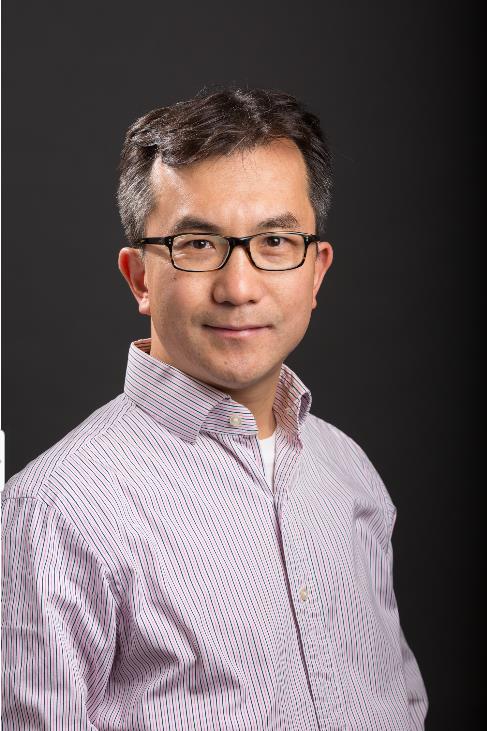
报告人简介:
Dr. Xiaoyong Yang, Associate Professor of Section of Comparative Medicine and Department of Cellular and Molecular Physiology, Yale University. He got his bachelor degree at Nankai University in 1993. In 1996, he obtained his master degree at Peking University. After obtaining his PhD degree at University of Alabama at Birmingham in 2001, he moved to HHMI/Gene Expression Laboratory, The Salk Institute and began his postdoctoral research training until 2008. From 2008 to now, Dr. Xiaoyong Yang worked as Assistant Professor and Associate Professor in Yale University.
The long-range goal of Dr. Yang’s research is to unravel temporal and spatial regulation of metabolic pathways in response to environmental and genetic cues, and to design strategies to battle metabolic diseases. Diet and the light/dark cycle are principle environmental cues that control intermediary metabolism. Nutrient flux into the cell triggers the posttranslational modification of intracellular proteins by the amino sugar called N-acetylglucosamine (O-GlcNAc). Their first goal is to elucidate how O-GlcNAc acts as a molecular switch that couples nutrient cues to cellular regulation of signal transduction, transcription and protein degradation. Both light and diet affect the body’s circadian rhythms. Their second goal is to depict molecular pathways that couple the circadian clock to metabolic physiology. They are employing a combination of experimental approaches, including biochemistry, molecular and cellular biology, mouse genetics, genomics, proteomics and metabolomics, to accomplish their research goals.
代表性论文:
1. Xie Z., D. Zhang, D. Chung, Z. Tang, H. Huang, L. Dai, S. Qi, J. Li, G. Colak, Y. Chen, C. Xia, C. Peng, H. Ruan, M. Kirkey, D. Wang, L.M. Jensen, O.K. Kwon, S. Lee, S.D. Pletcher, M. Tan, D.B. Lombard, K.P. White, H. Zhao, J. Li, R.G. Roeder, X. Yang*, Y. Zhao*. Metabolic regulation of gene expression by histone lysine β-hydroxybutyrylation. Mol. Cell 2016, 62:194-206. (*Co-corresponding author) PMID: 27105115
2. Ruan H.B., M.O. Dietrich, Z.W. Liu, M.R. Zimmer, M.D. Li, J.P. Singh, K. Zhang, R. Yin, J. Wu, T.L. Horvath, X. Yang. O-GlcNAc transferase enables AgRP neurons to suppress browning of white fat. Cell 2014, 159:306–17.
3. Li M.D., H.B. Ruan, M.E. Hughes, J.S. Lee, J.P. Singh, S.P. Jones, M.N. Nitabach, X. Yang. O-GlcNAc signaling entrains the circadian clock by inhibiting BMAL1/CLOCK ubiquitination. Cell Metab. 2013, 17:303–10.
4. Yang X., P.P. Ongusaha, P.D. Miles, J.C. Havstad, F. Zhang, W.W. So, J.E. Kudlow, R.H. Michell, J.M. Olefsky, S.J. Field, R.M. Evans. Phosphoinositide signalling links O-GlcNAc transferase to insulin resistance. Nature 2008, 451:964-9.
5. Yang X., M. Downes, R.T. Yu, A.L. Bookout, W. He, M. Straume, D.J. Mangelsdorf, R.M. Evans. Nuclear receptor expression links the circadian clock to metabolism. Cell 2006, 126:801-10.
6. Yang X., F. Zhang, J.E. Kudlow. Recruitment of O-GlcNAc transferase to promoters by corepressor mSin3A: coupling protein O-GlcNAcylation to transcriptional repression. Cell 2002, 110:69-80
(学部办公室)

